Misinformation on Food and Health: what we learned at EUFIC’s 2026 anniversary conference
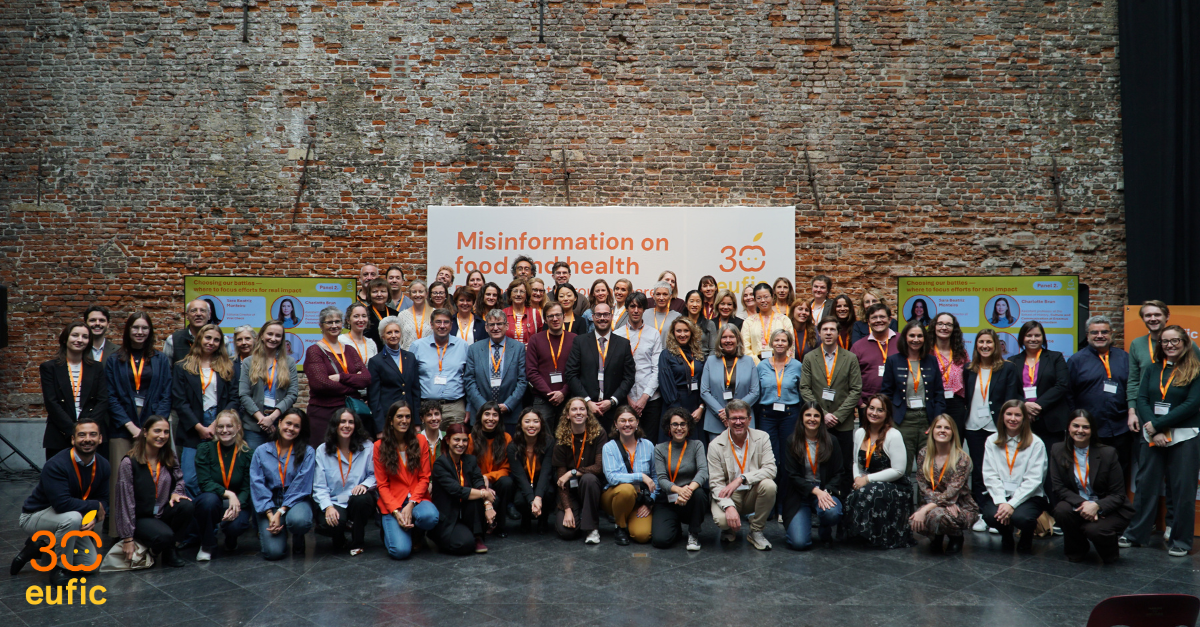
Last Updated : 16 October 2026On 8 October, EUFIC brought together 80 participants at La Bellone in Brussels for a conference on misinformation on food and health. Two expert panels and a series of small-group discussions took on two questions: how is the misinformation landscape changing, where should we focus our efforts to make a real difference, and how can we collaborate for real impact?
Here is what we took away from the day.
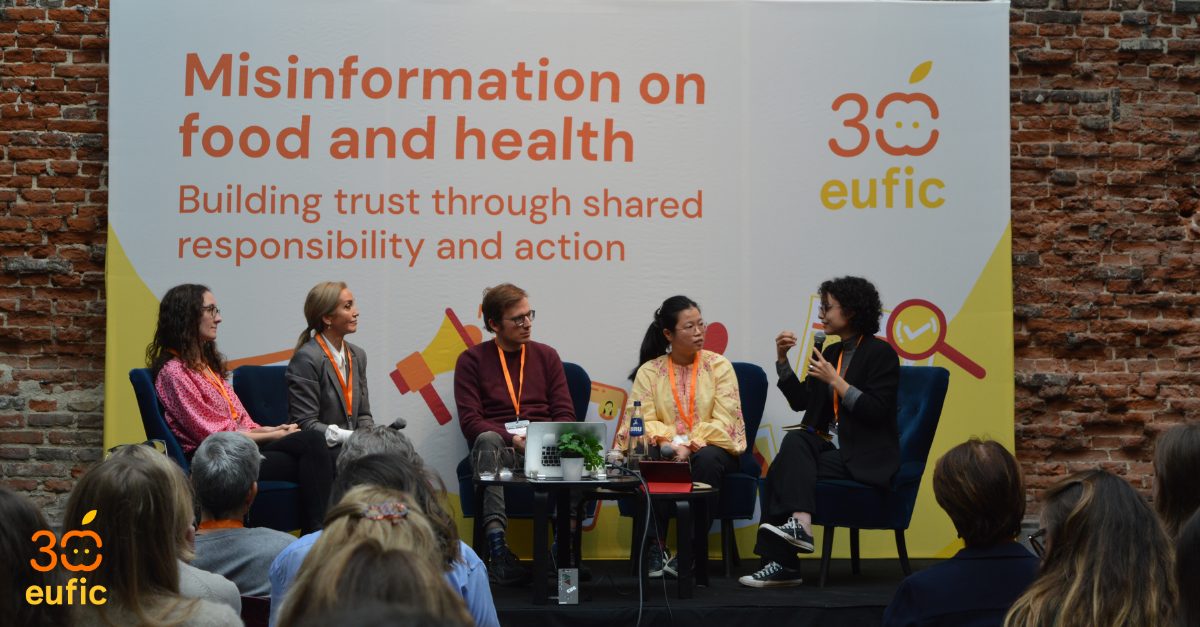
Panel 1: How the misinformation landscape is changing
Moderated by EUFIC’s Kenia Fita Capdevila, the first panel brought together:
- Alex Ruani, Chief Science Educator of The Health Sciences Academy and Doctoral Researcher at University College London
- Flora Teoh, Senior Health Editor with Science Feedback and the SIMODS project
- Elise Hutchinson, Cofounder and Director of Research, Foodfacts.org
- Pieter Brughmans, Registered dietitian and content creator @gezondgevonden
The panel touched upon the following points:
It is rarely as simple as “true or false?”
Much misinformation contains some truth, packaged in a misleading way, and science itself is not black and white. Not all misinformation is equally harmful either. Research has focused on how misinformation spreads, much less on its consequences, and understanding the risks of different types would help us decide what to prioritise.
Accuracy is not what makes people believe
Misinformation is often more engaging: it tells personal stories and offers clear cause and effect. High engagement numbers can also give a false sense of credibility. Health advice is hard to judge because so much of it sounds like common sense, and causality is hard to grasp, which makes personal stories easy to believe. Facts alone rarely change minds, narratives do. This also helps explain why content creators are so influential: their lived experience makes them look like authorities, and they come across as transparent and authentic.
Humour is a double-edged tool
Humour can capture attention, but it also lowers critical scrutiny and our defences. Satire sits at the threshold: it can backfire and mislead unintentionally.
AI needs safeguards
Generative AI tools don't always hold back when they don't know the answer, and one point made was that this is the fastest technology ever adopted without safety testing. Dietitians and doctors already consult these tools in their clinics, so the panel called for domain experts, including people who understand clinical risk, to help build safeguards. At the same time, fact-checkers are building AI agents that help identify narratives spreading misinformation.
Platforms need to be part of the conversation
Asked where they saw the largest gap in tackling misinformation, the audience pointed to content moderation on platforms more than to speed of response. That makes it hard to win inside such an environment, so experts should help define platform policy and where to draw the line. Panellists suggested offering platforms a dialogue to understand why they don't act, and creating alternatives to their algorithms and design, such as scrolling that reaches an end.
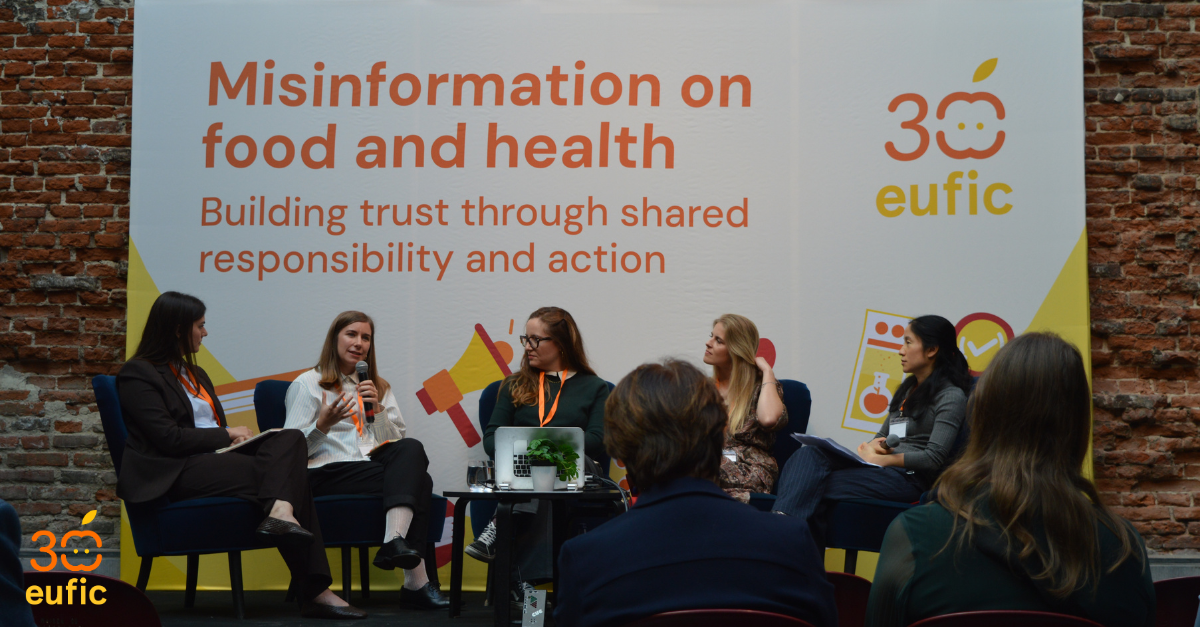
Panel 2: Choosing our battles – where to focus efforts for real impact
Moderated by EUFIC’s Betty Chang, the second panel featured:
- Rocío Benavente, Editorial Projects Coordinator, Maldita.es
- Charlotte Bruns, Erasmus University of Rotterdam and the COALESCE project
- Sara Beatriz Monteiro, Director of Viral Check
- Hayley Pearce, Doctoral Assistant, Department of Communication Sciences, Ghent University
Some key takeaways from the panel discussion included:
Many people who share misinformation have been misled themselves
Oftentimes people are not intentionally spreading misinformation, and they have been victims of it themselves. A great deal of it also circulates in closed groups such as WhatsApp and Telegram, where fact-checkers and health communicators rarely reach.
Reach the people who aren't looking
Those who don't think they need help with science and health information are often the ones who need it most. Panellists drew on their own experiences: focus on selected themes and offer a trusted source for each, explain context and omissions instead of only labelling something true or false, be honest about uncertainty and the limits of the evidence, and keep a non-judgmental tone, because people will not look for reliable information if they feel judged.
Make it personal and engaging
Participants noted that people often don't see the risks of misinformation for themselves, and that people on social media tend to want to be entertained rather than taught. Personal messages, participatory methods and helping people feel confident in their own judgement were seen as more promising than lessons. For young people, the discussion stressed media literacy approaches that don't patronise them, and that take social norms, trends and challenges seriously.
Deepfakes are already here
Recognising AI-generated content is no longer realistic for individuals. Instead, people need the skills to trace information: Who is the source? Are there other sources that back it up? What is the goal? They also agreed that too much responsibility sits with users rather than with platforms and their algorithms.
Breakout discussions
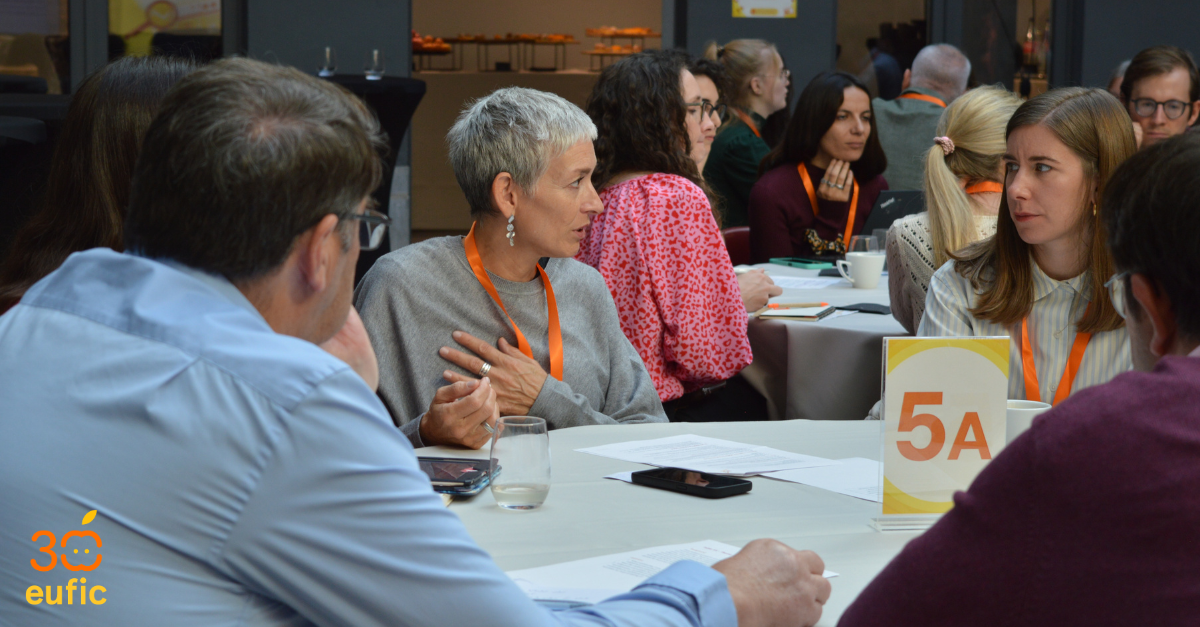
The conference also included small, group discussions, in which participants rotated between tables across two rounds. Five themes were covered: rapid response, how to organise and sustain joint work, reaching people we currently miss, and the role of platforms and incentives. Some common threads emerged:
- Start simple and build on what exists. Participants favoured a focused set of priorities and light, flexible ways of working over creating new structures, and building on existing European efforts rather than duplicating them.
- Be selective. Responding to every false claim is neither realistic nor always helpful. Prioritising by potential harm and reach, and getting accurate information to the people who can carry it further, was seen as more effective.
- Work through trusted messengers. Community leaders, local radio, content creators and other credible voices can reach people that scientists and institutions struggle to, but only if we listen first.
- Transparency. The role of industry and social media platforms in tackling misinformation came up in the discussions, and views differed on how involved they should be. Participants were clear on what should apply whoever is involved: open declarations of interest, independent oversight, clearer labelling of sponsored content, and more accountability for content creators and platforms
These discussions will help shape EUFIC's work in the area of misinformation on food and health.