30 years of EUFIC
Misinformation in the food and health space is not a new challenge. EUFIC was founded in 1995, before the internet became mainstream, precisely to address it. The organisation was created to fill a clear gap: an impartial body that makes the science of food and health more accessible and easier for the public to understand.
Improving people’s lives through science-based information and activities has been our purpose ever since. How we work towards that goal is what has evolved over time, driven by our ambition to stay at the forefront of content formats and routes to reach people.
How has EUFIC’s mission changed over the years?
Our 30 years of experience in an ever-changing food system has led us to our current mission: ‘We empower and facilitate healthier and more sustainable diets and lifestyles through science-based information and activities’.
We have broadened our communication to directly reach the general public, while also continuing to engage with multipliers like healthcare professionals, educators, media, and science communicators.
Our scope has also expanded. Diet is just one piece of the puzzle, and our content and campaigns now also address physical activity and other lifestyle factors that shape health. We've also embraced sustainability. Acknowledging the influence of our diets on our health and how our food choices impact the environment and climate change, we want to equip citizens with the right knowledge on how to eat both healthily and sustainably.
How we communicate has changed too. Content is now shorter, more visual, and more actionable. Consumer insights and behaviour change research inform everything we do because understanding how people think and act is as important as the science we communicate.
Four long-term goals now guide everything we do:
- Building food and health science literacy and promoting evidence-based decision-making,
- Facilitating the healthy and sustainable dietary transition
- Supporting the prevention of diet- and lifestyle-related NCDs and to
- Empowering food waste reduction by citizens.
Those goals are the result of a process that started in 2021 with the revision of key strategy documents of national, European and international institutions, and that involved the EUFIC team, EUFIC’s Board of Directors and Scientific Advisory Board, and EUFIC’s membership, through multiple iterations. The goals contribute to achieving sustainable food systems, protecting both the health of the people and the planet. They serve as a compass guiding our work.
EUFIC’s history in a nutshell:
- 1995 – 2000: Birth of EUFIC as an internet pioneer of food and health communication
- 2001 – 2005: EU research & tools for educators
- 2006 – 2010: EUFIC grows – More scientific publications, partnerships & multimedia
- 2011 – 2015: EUFIC broadens its reach – Coordinated research, social media & a first conference
- 2016 – 2020: Consumer-friendly content in a fast-changing environment
- 2021-2025: Strengthening impartiality and direction: A new governance and long-term goals
1995 – 2000: Birth of EUFIC as an internet pioneer of food and health communication
In 1995, EUFIC was founded to help address the growing challenge of misinformation in the food and health space. The ambition was to help people make better choices regarding their diet by increasing and improving public knowledge of food and health topics. EUFIC was designed as an impartial actor that communicates science-based information about food and health issues in a way that is easy to understand for non-specialist audiences. From the start, EUFIC has dealt with topics spanning nutrition and health, as well as food safety and quality, areas where public debate is often shaped by persistent misinformation.
Back then, EUFIC had no online presence and consisted only of one person – the first director, Anna Jung, who led EUFIC until 2005. Its flagship print newsletter, ‘Food Today’, was distributed by post in a mailer that reached countries across Europe. The first five issues of the newsletter addressed the meaning of nutrition, its key parameters, and the consequences of obesity.
In 1997, EUFIC became a pioneer of food and health information on the internet, which at that time had only about 1 million websites across the world, and EUFIC was one of the first to provide science-based information on food.
2001 – 2005: EU research & tools for educators
EUFIC expanded its target audience to include children and educators in 2001, with the webpage CoolFoodPlanet.org, a fun, interactive learning tool.
In 2004, EUFIC started its first EU-funded research project, SAFE FOODS (2004-2008), with the aim of improving food safety management and transparency.
In the spirit of trustworthiness, EUFIC obtained the Health On The Net (HONcode) certification in March 2004. Health On The Net (HON) is a non-profit organisation that promotes transparent and reliable health information online.
2006 – 2010: EUFIC grows – More scientific publications, partnerships & multimedia
In 2006, Dr Josephine Wills started as EUFIC director and led EUFIC until 2014.
In the same year, EUFIC joined the EU Platform for Action on Diet, Physical Activity & Health, a novel voluntary partnership launched by the European Commission in 2005 bringing together different stakeholders to fight rising obesity rates through self-regulation and non-binding commitments that focused on reformulation, marketing, consumer information, education and physical activity. The group was chaired by the European Commission and included the World Health Organization (WHO) as an observer.
Until then, EUFIC content had been presented in the form of classical articles and newsletters, but in 2006, we produced the first EUFIC multimedia content through podcasts and webinars.
2006 was also the year EUFIC published its first scientific publications:
- Quo Vadis Food Risk Communication? by Jung A. This publication deals with the requirements for food risk communication research, explaining the take-home lessons from past food risk communication topics and how food safety issues vary from culture to culture. It sums up the output of an academic workshop organised by EUFIC, with main academics in the field, to address this issue. A summary can be found here.
- What should be the role of the media in nutrition communication? by Fernández-Celemín L, Jung A. This article covers the challenges of communicating science to the lay public, such as the diversity of consumer audiences, their need for clear messages, the different agendas of all the communicators, and the inherent complexity of the scientific message. It also addresses the role of the media and scientists in bringing scientific communication to the public and how this could be improved. A summary can be found here.
In 2007, EUFIC published its first Global Update on Nutrition Labelling, a comprehensive report mapping the state of nutrition labelling worldwide, which EUFIC no longer produces, and, for the first time, coordinated an EU-funded project, FLABEL (Food Labelling to Advance Better Education for Life).
To help people understand how energy balance works in practice, EUFIC created an interactive online energy balance tool in 2008.
In 2009, EUFIC’s focus was on partnerships, for example, organising a workshop in collaboration with the Food and Agriculture Organisation of the United Nations (FAO) on food-based dietary guidelines. Fourteen EU countries participated.
To reach more people across the EU, EUFIC relaunched its website in 11 languages (EN, FR, DE, IT, ES, EL, CZ, PL, SK, HU, PT) in 2010. In the same year, EUFIC published its first Annual Report.
2011 – 2015: EUFIC broadens its reach – Coordinated research, social media & a first conference
In September 2011, the EUFIC Facebook page was launched as the first of EUFIC’s social media channels, continuing its efforts to reach more consumers.
In 2012, Twitter and YouTube accounts followed, as well as a new version of the CoolFoodPlanet website.
In addition, EUFIC started coordinating the EU-funded CLYMBOL project, which aimed to better understand the effects of health claims and symbols on food labels on people’s purchase and consumption behaviour.
Alongside EUFIC’s homepage, the CoolFoodPlanet webpage for children also received the HONcode certification.
In 2013, EUFIC undertook 13 EU-funded research projects, tackling topics such as obesity in Europe, the gut microbiome (with the outstanding MyNewGut project leading efforts at the EU level), and sustainable aquaculture.
EUFIC also focused on connecting with professionals in 2013 through four EUFIC-coordinated scientific symposia at the International Congress of Nutrition in Granada to discuss the latest scientific evidence on food and nutrition. In the same year, EUFIC launched its LinkedIn page to connect with nutrition and health professionals.
In 2014, EUFIC pledged support to the EU Action Plan on Childhood Obesity launched by EU Member States.
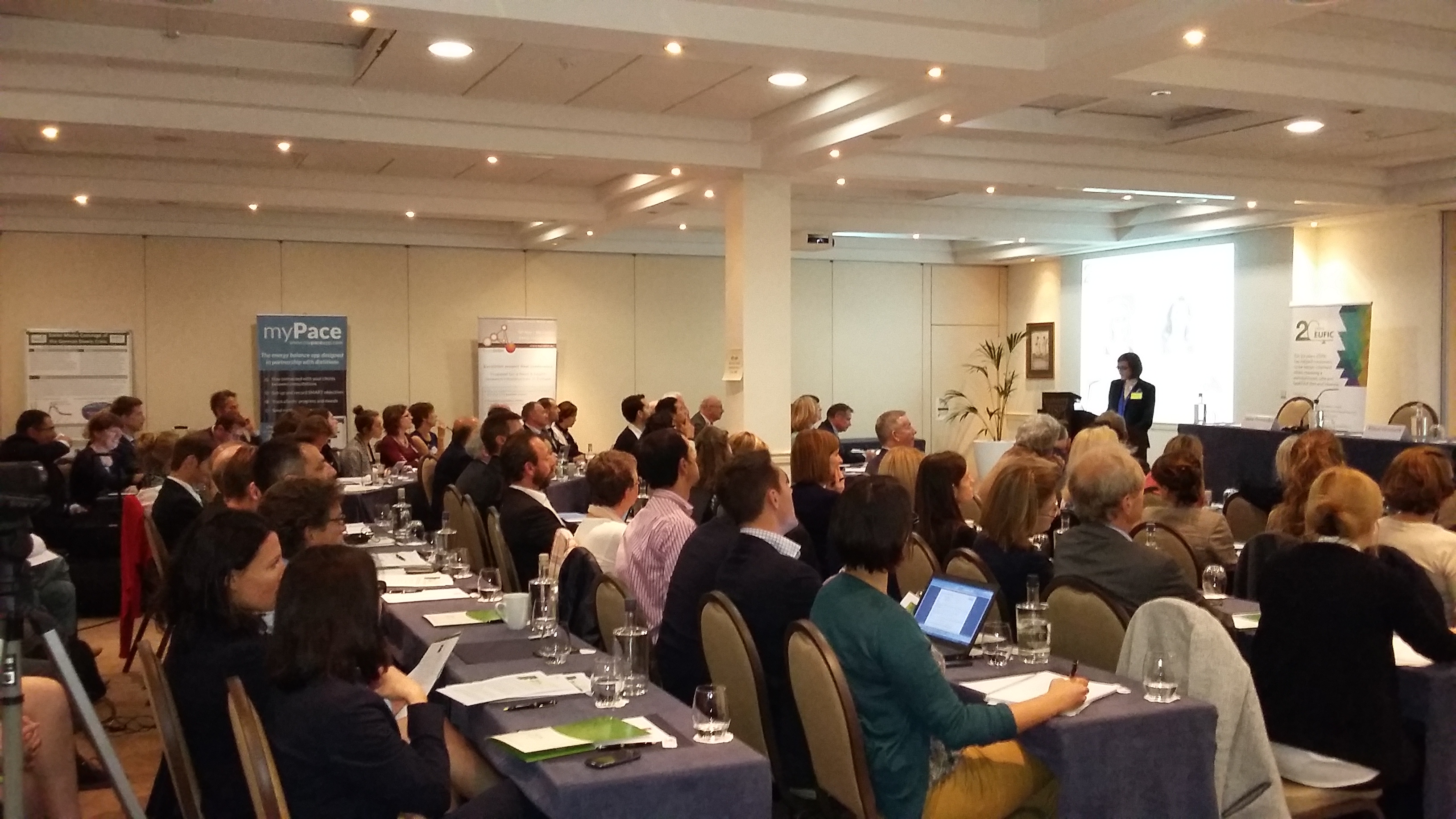
EUFIC’s first conference marking its 20th anniversary was held in 2015.
2015 was also the year when Dr Laura Fernández Celemín became EUFIC director, a role she still holds today.
To counter misreporting on topics such as food safety, quality, nutrition, and health in the media, EUFIC launched the Speaking up for Science Action Network (SuSAN), bringing together a group of European experts to comment on misinformation in the media.
EUFIC also expanded its presence in the Gulf region, translating its content into Arabic to reach a fast-growing audience that had limited access to independent, science-based food information.
2016 – 2020: Consumer-friendly content in a fast-changing environment
2016 marked a turning point in EUFIC’s recent history, starting with a new visual identity, with the EUFIC logo you know now, and gave a new ‘look and feel’ to the website design.
EUFIC also joined EIT Food to support an EU-wide consortium of stakeholders working to future-proof our food systems.
Another account, the Twitter (now X) handle @SciFoodHealth, joined EUFIC's social media channels. This account publishes mainly news from the EU and EIT Food projects in which EUFIC is involved.
The 2016 EUFIC Conference revolved around the topic “Understanding consumers and changing behaviour”.
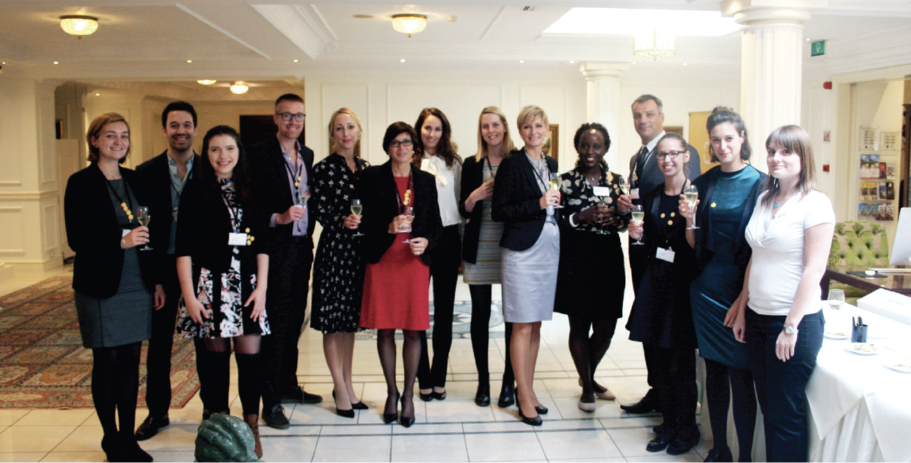
In 2017, EUFIC signed up to the EU transparency register, and that same year, the theme of the EUFIC conference was “Trust in science in the post-fact era”.
EUFIC also intensified its efforts in the fight against fake news, explaining concepts such as correlation and causation, hazard and risk, as well as the overall hierarchy of scientific evidence through a series of infographics. Other important topics in 2017 included food waste and childhood obesity.
EUFIC’s membership underwent an expansion in 2017 to include Associate Members for the first time, with WWF, University of Athens and EuroFIR joining EUFIC to represent key perspectives in the food and health debate.
In 2018, EUFIC focused on bringing health professionals and local multipliers, such as dietitians and influencers, closer to its vision and mission, encouraging and equipping them to champion science-based food information among their own audiences. Social media played a central role in this effort, as it does across EUFIC's work more broadly.
This was also represented in the engagement of influencers as agents of change in the food value chain, when EUFIC coordinated the EIT Food Ambassadors programme. In this context, EUFIC launched the event series ‘#EatingtheGap’ that brought chefs and influencers together to discuss and experience food.
Sustainability and food waste were important topics in 2018, amongst others, through a FAO collaboration on the Global Initiative on Food Waste and Loss.
In addition, EUFIC expanded its reach by building a network of partners across the continent and establishing relationships with national foundations in additional countries. This included collaborations with the Slovenian Nutrition Foundation (NUTRIS) and the Sabri Ülker Foundation, both of which are EUFIC Associate members, who translated and published our content in local languages.
As website traffic increased by 69% in 2019 compared to the previous year, reaching over 2 million page views, it became increasingly complex to produce content "for Europe" as a whole. We therefore reduced our translations from 11 languages to the five most widely spoken in Europe (English, Spanish, German, Italian, and French) and focused instead on improving the visibility of this content. Collaborations with leading organisations and multipliers at the national level became crucial to reach Europeans via digital campaigns.
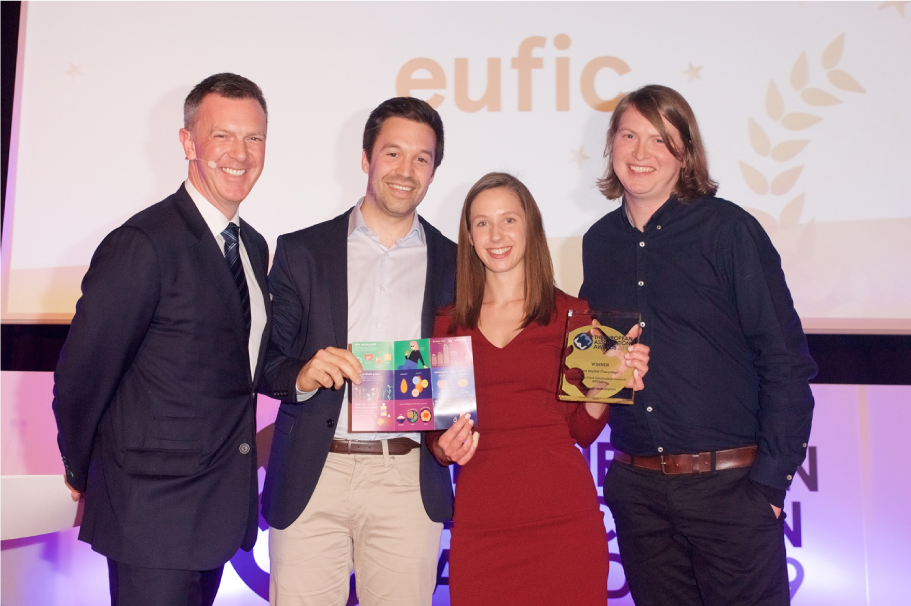
In 2019, EUFIC received the European Association Awards for “Best Digital Campaign” for its 2018 “Hungry for Whole Grain” campaign, which raised awareness about the importance of whole grains.
EUFIC expanded its online presence to Instagram in 2020, reaching as many as 10,000 followers in less than a year.
In 2020, EUFIC issued rapid-response articles to fill the information vacuum on food & immunity at the start of the COVID pandemic, addressing people's questions and concerns and countering misinformation surrounding the relationship between COVID-19 and food, reaching 100+ million people.
2021 – 2025: Strengthening impartiality and direction: A new governance and long-term goals
In 2021, EUFIC launched its new governance, involving key sectors to fulfil our mission: the scientific community, healthcare and science communication practitioners, the private sector, and civil society.
At the end of 2022, EUFIC approved its long-term goals, a stable framework guiding EUFIC activities.
This period marks big milestones like:
- receiving Operating Grants from the European Commission, EU4Health (2022, 2023),
- first projects with vulnerable populations in collaboration with Caritas and Food Banks,
- invitations to present by EC, OECD, FAO, WHO and various national authorities
- evolving to an audience-first approach and increasing the number of activities towards specific target audiences (elderly, patient populations, low socioeconomic status groups, etc.)
- campaigns such as the SwitchToWholeGrains campaign, informed bottom-up by audience real-life questions, and content production regularly informed by consumer research and user surveys, and its dissemination amplified by working with influencers,
- enlarged collaborations and enrichment of EUFIC activities through outputs developed in EU-funded projects (e.g. Sustainable Food Systems Network, FoodStories storytelling training materials, co-branded mapping on food additives with FoodSafety4EU).
In 2023, our campaign on food literacy, aimed at improving critical thinking skills and helping people identify reliable sources of information, generated 1.75 million impressions and 33K engagements across our social media platforms, with targeted media outreach reaching over 1.8 million.
Since 2022, EUFIC partnered with the global Beans is How Coalition, issuing a co-branded annual campaign around World Pulses Day, increasing outreach of plant-based eating messages, reaching an overall 9.4+ million impressions
In 2025-2026, we celebrated EUFIC's 30th anniversary. A milestone of this chapter is that EUFIC now coordinates two EU-funded projects, with a third due to start soon, a significant step up given that EUFIC had taken on a coordinating role only twice in its entire history. These projects, FoodChoices4LIFE, NUTRIMIND, and Infoodmation, tackle topics such as healthy and sustainable diets and misinformation, themes that sit at the heart of EUFIC's mission.
Over the past 30 years, we have published 85 scientific publications, 77 of which are peer-reviewed. We are proud to have built a thirty-strong, passionate, professional team with a variety of backgrounds, ranging from digital communication to nutrition, food safety, psychology, and consumer science.