Is brown sugar healthier than white sugar?
Last Updated : 26 March 2026Key Takeaways
- Brown sugar is also a refined product made using almost the same production process as white sugar. The main difference is the retention or addition of small amounts of molasses, which affect colour, flavour, and texture. Molasses contain traces of minerals but the quantities found in brown sugar are too small to meaningfully make a contribution to our nutrient needs.
- Both white and brown sugar are digested in the same way and raise blood sugar similarly, with comparable glycaemic effects.
- Brown sugar is not a healthier choice. Limiting total added sugars intake is what matters most for overall health, rather than choosing one type of sugar over another.
Brown sugar stands out with its rich colour and distinctive caramel flavour, making it a popular alternative to white sugar in baking and cooking. However, its darker appearance doesn’t necessarily make it a healthier option. Understanding how brown sugar is made, and how it compares nutritionally with white sugar can shed light on its true nutritional value and clear up this common misconception.
Fact: Brown and white sugar are nutritionally almost identical
Both brown and white sugar come from sugar cane or sugar beet and follow almost the same production process. First, the plant is crushed to release its juice, which is then heated, refined to remove the impurities, and concentrated by evaporation to form a thick syrup. As this syrup cools, sugar crystals begin to form. At this stage, sugar naturally contains molasses, which is a thick, dark syrup that gives sugar its brown colour.1
To produce white sugar, the crystals are spun in a centrifuge to remove most of the molasses, leaving white sugar crystals. Brown sugar is either less refined so that some molasses remain, or is made from refined white sugar with a small amount of molasses added back during processing.2 The amount of molasses determines whether brown sugar is light or dark and it gives it its caramel flavour and softer texture.
Because both white and brown sugar are composed of sucrose, their nutritional profile and calorie content are nearly identical.3,4 Also, neither white nor brown sugar contains dietary fibre. During the refining process, all fibre naturally present in the original plant source is removed.
While molasses contain minerals (e.g., calcium, potassium, magnesium, and iron), the amounts present in brown sugar are extremely small and do not make a meaningful nutritional contribution. For example, a tablespoon (4.6 g) of brown sugar provides less than 1% of your daily needs of these minerals. To obtain significant amounts of minerals from brown sugar, we would need to eat very large quantities, which would lead to excessive sugar intake and harm health. In other words, relying on brown sugar as a source of minerals is neither an efficient nor a healthy dietary strategy.
From a health perspective, what matters most isn’t the colour of the sugar, but the amount we eat. Both white and brown sugar are sources of added sugars, which the European Food Safety Authority (EFSA) and many European dietary guidelines advise limiting to as little as possible.5,6
Table 1. Nutritional composition of white and brown sugar and their contribution to adult daily reference intakes (50 g/day). 3,4 Values are shown per 50 g portion of sugar (equivalent to ~10% of total energy in a 2,000 kcal diet, the maximum limit recommended by the World Health Organization. 50 g of sugar is also equal to 12.5 sugar cubes or roughly 1/3 can of soda (120 ml)). For each nutrient, the absolute amount is reported, with the percentage of the EU adult Nutrient Reference Value (NRV) as reported in EU Regulation 1169/2011.7
| Nutrient Per 50g | White sugar (%NRV) | Brown sugar (%NRV) |
| Energy | 194 kcal | 190 kcal |
| Fat | 0 g | 0 g |
| Saturated fat | 0 g | 0 g |
| Carbohydrates | 50.0 g | 49.1 g |
| Sugars | 49.9 g | 48.5 g |
| Fiber | 0 g | 0 g |
| Protein | 0 g | 0.06 g |
| Calcium | 0.5 mg (0.06%) | 41.5 mg (5.2%) |
| Iron | 0.0025 mg (0.02%) | 0.355 mg (2.5%) |
| Magnesium | 0 mg (0%) | 4.5 mg (1.2%) |
| Potassium | 1 mg (0.05%) | 66.5 mg (3.3%) |
| Phosphorus | 0 mg (0%) | 2 mg (0.3%) |
| Sodium | 0.5 mg (0.03%) | 14 mg (0.7%) |
| Selenium | 0.3 µg (0.5%) | 0.6 µg (1.1%) |
Myth: brown sugar is healthier than white.
Many people believe that brown sugar is a healthier choice than white sugar, often assuming that its darker colour and slight stickiness mean it’s more “natural” or “less processed.” However, this belief doesn’t reflect how brown sugar is actually made or how it behaves in the body. As explained above, brown sugar is produced using essentially the same refining process as white sugar. The presence of small amounts of molasses changes flavour and appearance but does not meaningfully alter the nutritional value or health effects.
Both brown and white sugar are composed mainly of sucrose (over 94%) and are digested and metabolised in the same way.3,4 On the glycaemic index (GI), which measures how quickly foods raise blood sugar on a scale of 0 to 100, sucrose scores around 65, a medium value.8 Brown sugar affects blood sugar almost the same as white sugar and cannot be considered a healthier choice.
Fallacy: brown sugar seems more natural so it’s healthier
The idea that brown sugar is better is driven by a common reasoning error: we tend to associate foods that look more “natural,” and feel less refined, with greater healthiness.9,10,11 Brown sugar’s colour, softer texture, and hint of molasses create a health halo that makes it seem more wholesome, even when its nutritional profile is almost identical to white sugar.
This fallacy confuses appearance and minimal differences in processing with meaningful health effects. From a physiological perspective, our body metabolises brown and white sugar in the same way.
The real issue isn’t whether sugar is brown or white, it’s how much added sugar you eat overall. Eating too much sugar, of any kind, can contribute to weight gain and obesity, tooth decay, increased risk of type 2 diabetes, cancer and cardiovascular diseases.12 The healthiest approach is trying to reduce your total added sugar intake.
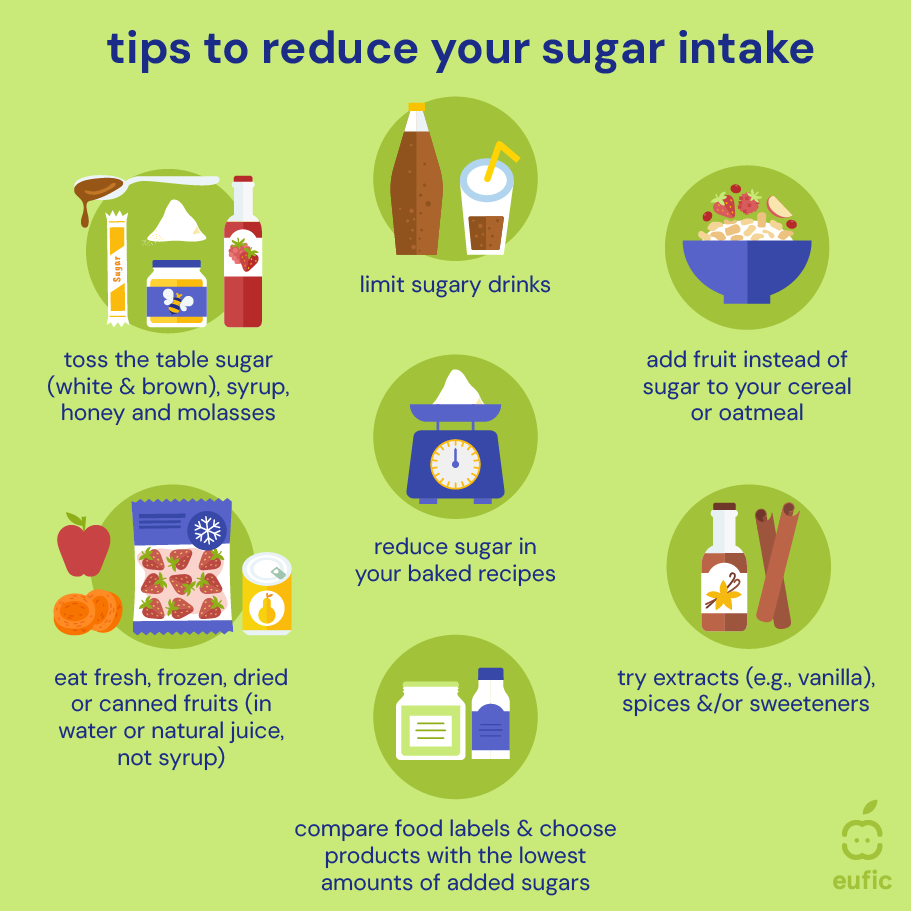
Figure 1. Tips to reduce your sugar intake.
References
- EUFIC website, ‘Sugar – how is produced from cane?’ Accessed 10 December 2025.
- Mermelstein NH (2015). More than a spoonful of sugar. Food Technology:67–71.
- USDA FoodData Central website, ‘Sugars, granulated – nutrients (SR Legacy)’. Accessed 9 December 2025.
- USDA FoodData Central website, ‘Sugars, brown – nutrients (SR Legacy)’. Accessed 9 December 2025.
- EFSA Panel on Nutrition, Novel Foods and Food Allergens (NDA) (2022). Tolerable upper intake level for dietary sugars. EFSA Journal 20(2):e7074.
- European Commission Knowledge for Policy platform, ‘Food-based dietary guidelines: recommendations for sugars’. Accessed 9 December 2025.
- Regulation (EU) No 1169/2011 of the European Parliament and of the Council of 25 October 2011 on the provision of food information to consumers. Accessed 5 December 2024.
- Dowse P (2022). What is the glycaemic index of sugar? Sugar Nutrition Resource. Accessed 10 December 2025.
- Román S, Sánchez-Siles LM & Siegrist M (2017). The importance of food naturalness for consumers: results of a systematic review. Trends in Food Science & Technology 67:44–57.
- Patterson NJ, Sadler MJ & Cooper JM (2012). Consumer understanding of sugars claims on food and drink products. Nutrition Bulletin 37(2):121–130.
- Gagliardi L (2025). Naturalness seeking minds: the cognitive foundations of naturalness bias in consumer food choice. Food and Humanity 5:100716.
- Huang Y, et al. (2023). Dietary sugar consumption and health: umbrella review. BMJ.