What are the best ways to lose weight, according to science?
Last Updated : 13 May 2026Key Takeaways:
- There’s no single “perfect” diet for weight loss. Weight loss happens when you burn more energy than you eat and drink. Sustainable results depend on long-term habits, not strict rules or short-term fixes.
- What you eat matters more than timing or single foods. No food causes weight loss or gain on its own. Diets that work best are balanced, mostly plant-based, nutrient-dense, and enjoyable enough to stick with.
- Combining healthy eating with physical activity leads to better long-term results and comes with extra health benefits. Physical activity helps reduce harmful belly fat, preserves muscle, supports metabolism, and makes it easier to maintain weight loss over time.
- One-size-fits-all diets fail because weight is shaped by biology, habits, and environment. Hormones, sleep, stress, genetics, and food environments all play a role. The best approach is personalised, flexible, and focused on long-term habits, especially to prevent weight regain.
Weight management plays an important role in overall health, including reducing the risk of chronic diseases. This article is aimed at adults looking for practical, science-based advice to manage their weight through everyday habits.
There is no one-size-fits-all solution. A personalised approach that considers your genetic risk, lifestyle, routines, and preferences is key for making changes that last. To help you navigate this, this article explains the science behind weight gain and weight loss, and provides realistic, evidence-based tips focused on diet and physical activity.
While many factors can influence body weight, this article focuses on the aspects you can influence in daily life. Other types of support such as behavioural support, psychological therapies, sleep improvement, stress management, and, for some people, medical treatments, can also be important. These options are best discussed with a designated healthcare professional.
How to lose weight, according to science?
To carry out the body’s essential, everyday functions, we require energy. Weight loss happens when your body burns more calories than you eat and drink. This is called an energy deficit.1 On the other hand, if you eat and drink more calories than you use, over a period of time, you’ll gain weight. Everyone’s energy needs are different, but your weight tends to stay stable when the calories you eat and drink match the calories you burn through daily activities and exercise.
However, it’s important to understand that a change in body weight doesn’t always reflect changes in body fat. The number on the scale can go up or down due to changes in body fat, muscle, or water. In some situations, such as illness or dehydration, weight loss may reflect temporary or unintended changes rather than a reduction in body fat. From a health perspective, losing excess body fat, especially around the abdomen, is the more meaningful goal, rather than simply reducing body weight. This is because higher levels of body fat, particularly visceral fat around the organs, are more strongly linked to health risks such as heart disease and type 2 diabetes.2
The energy balance equation simply shows the difference between energy coming in and going out, not exactly the type of weight you lose. But, focusing only on calories ignores how the body responds to a sustained calorie deficit, since your body adapts as you eat less. It starts burning fewer calories, and hormonal changes can make you feel hungrier and less full. These changes can slow down weight loss over time or even lead to a plateau, where weight stays the same, even if you’re continue eating less.3
So, how many calories need to be cut each day to lose weight? While you do need a calorie deficit to lose fat, it’s not as simple as “calories in, calories out”. You may have heard that eating 3,500 fewer calories per week will make you lose about half a kilo (one pound). While that’s easy to remember, it doesn’t really show how the body works. This is because weight change isn’t a fixed or linear process.
Also, energy inputs and outputs from a single day will not significantly impact weight gain or loss. This happens over a longer term. For example, in a small study, men ate about 1,500 extra calories (more than their normal diets) per day for three days. The number on the scale went up, but the increase was mostly from extra water and sodium, not body fat. In other words, a few days of overeating can make the scale jump, but that doesn’t automatically mean you’ve gained fat.4
While energy balance matters, weight regulation is much more complicated than the over-simplified, innacurate instruction to “eat less, move more”.5 This is because many complicated factors play a part in how we gain, maintain or lose weight, like how well you sleep, when you eat, your social life, your surrounding environment, stress levels, hormones, genetic predisposition, age, and gender. That is why different people can follow similar diets yet experience different results.
Is there one perfect diet for weight loss?
There is no single “perfect” diet for weight loss.6 What works best varies from person to person – flexibility and personalisation are key! The diets that tend to be more supportive of a healthier lifestyle are balanced, enjoyable, and realistic to stick with, not just overly restrictive. Whatever approach you choose, it’s important to meet your body’s nutritional needs. The diet you choose should be based on your lifestyle and any existing medical conditions. Your doctor or a registered dietician or nutritionist can help you find the strategy that works best for you.
While there’s no “one-size-fits-all" plan, research shows that diets with positive health outcomes have a lot in common. Balanced eating patterns linked to good health, such as the Mediterranean, vegetarian, vegan, or pescatarian dietary patterns, are mostly built around plant foods.7 In any case, the health impact of a diet depends less on its name and more on how well it follows a few broad evidence-based principles. These principles are based on international public health guidelines, such as those from the WHO and can thought of as general guidelines8:
- Eat a variety of fruits, vegetables, legumes, nuts, seeds, and whole grains to help reach at least 25 g of fibre per day.
- Aim for at least 400 g (about 5 portions) of fruits and vegetables daily, not counting potatoes, sweet potatoes, cassava, or other starchy roots.
- Prioritise carbohydrates from unrefined sources, such as whole grains and legumes.
- Favour plant-based source of protein (e.g., legumes, nuts and seeds) over animal-based protein sources, particularly red meat.
- Keep added and free sugars to a minimum.
- Limit total fat to less than 30% of daily calories (i.e., ≤66 g for a 2,000 kcal diet and ≤83 g for 2,500 kcal diet). In practice, this means being mindful of added fats like oils, butter, spreads, and creamy sauces, as these can quickly increase calorie intake. Try using small amounts when cooking, and favour cooking methods like grilling, baking, or steaming instead of frying.
- Limit saturated fats to less than 10% (≤20 g for a 2,000 kcal diet and ≤25 g for a 2,500 kcal diet). Aim to replace saturated fats with polyunsaturated or monounsaturated fats from plants where possible, or with carbohydrates from foods containing naturally-occurring fibre. For example, use olive or rapeseed oil instead of butter, choose lean cuts of meat or poultry instead of fatty cuts, and opt for yoghurt or milk with lower fat content instead of full-fat versions. You can also swap some animal-based foods for plant-based options, such as beans or lentils in place of part of the meat in a meal.
- Keep salt intake below 5 g per day (around one teaspoon). In practice, this means limiting foods often highly salted (like ready meals, processed meats, and salty snacks), tasting food before adding salt, and using herbs, spices, lemon, or vinegar to add flavour instead.
- Choose water or unsweetened drinks instead of sugar‑sweetened beverages such as soft drinks, sports drinks, energy drinks, or fruit juices.
Overall, base your diet on diversity, balance, moderation, and adequacy, ensuring sufficient but not excessive energy intakes, a good mix of macronutrients, and wide food variety across food groups.
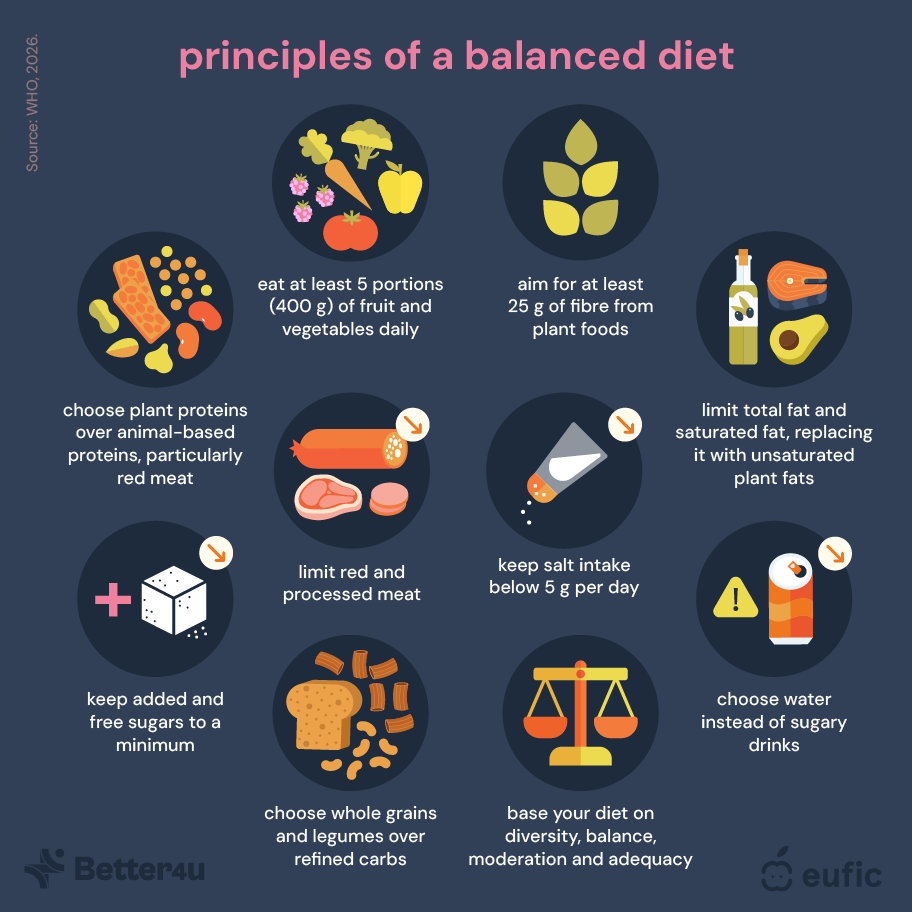
Figure 1. Principles of a balanced diet.8
What foods make you lose weight?
No single food will make you lose or gain weight alone. Focusing on one “good” or “bad” food isn’t realistic and usually doesn’t last. Likewise, cutting out entire food groups from the diet can lead to nutrient deficiencies, and create a negative relationship with food, which in extreme cases can lead to eating disorders.9 Balance, variety and portion control are key.
Some foods pack a lot of calories into a small volume. These are often called energy-dense foods and include foods rich in sugars and/or fats, like some types of biscuits, crackers, and other dry savoury and sweet ‘snack’ foods. Other foods, such as fruits and vegetables, provide fewer calories for the same amount of food. Because they’re high in water and fibre, nutrient-dense foods like fruits and vegetables can help you feel fuller and more satisfied, which can make it easier to manage your weight.10
A helpful approach is to base most of your meals on nutrient-dense foods. These foods can provide fibre, vitamins, minerals, and other health-promoting components and have little added sugars, saturated fat, and sodium (salt). These include vegetables, fruits, whole grains, seafood, eggs, legumes (such as beans, peas and lentils), unsalted nuts and seeds, fat-free and low-fat dairy products, and lean meats and poultry, when prepared with no or little added sugars, saturated fat, and sodium. Replacing foods high in saturated fat with those richer in unsaturated fats is also a helpful strategy. In practice, this means making simple swaps: for example, choosing plant oils (like olive, sunflower, or rapeseed oil) instead of butter, (unsalted) nuts or seeds instead of processed snacks high in fat, salt and sugar, and oily fish (such as salmon or mackerel) instead of fatty cuts of meat.6
If you’re reducing calories, it’s important not to miss out on essential nutrients, including fibre, macronutrients, and micronutrients. For example, foods like nuts or salmon might be energy-dense, but they provide valuable nutrients; portioning can help keep calories in check (e.g., about 30 g of nuts is a reasonable snack). Research shows that eating a handful of nuts per day is unlikely to contribute to overweight and obesity, likely because they contribute positively to feelings of fullness and reducing hunger.11,12
Finally, be mindful of foods and drinks high in fat, sugar, and salt. Check the nutrition label to help identify these. For beverages, opt for water, or unsweetened or lower-energy sweetened alternatives. Sugar-sweetened beverages add calories that don’t help us feel more full and are consistently linked to weight gain.13
Is the timing of eating important for weight loss?
Research suggests that eating within a set time window, eating fewer meals, or having more of your food earlier in the day can lead to small changes in body weight and waist size over time. These approaches may also slightly improve blood sugar levels. However, the effects are generally small and seem to happen mostly because people end up eating fewer calories overall, not because meal timing “boosts metabolism” or helps the body burn more energy. In general, when people eat the same number of calories, eating at specific times of day does not lead to greater weight or fat loss.14
That said, even though the scientific evidence is still limited, meal timing may still be helpful for some people. It may make eating feel more manageable by reducing late-night snacking, supporting appetite control, and fitting better with daily routines.15
Can you lose weight without exercise?
Yes, it’s possible to lose weight through dietary changes alone. However, combining healthier eating with exercise and daily physical activity leads to better long-term results and comes with extra health benefits.16
A meta-analysis found that increasing the amount of exercise leads to greater reductions in visceral fat in people with overweight and obesity compared to calorie restriction alone. While both diet and exercise can reduce fat via a negative energy balance, only exercise shows a clear dose-response effect: the more you move, the more visceral fat you tend to lose.17
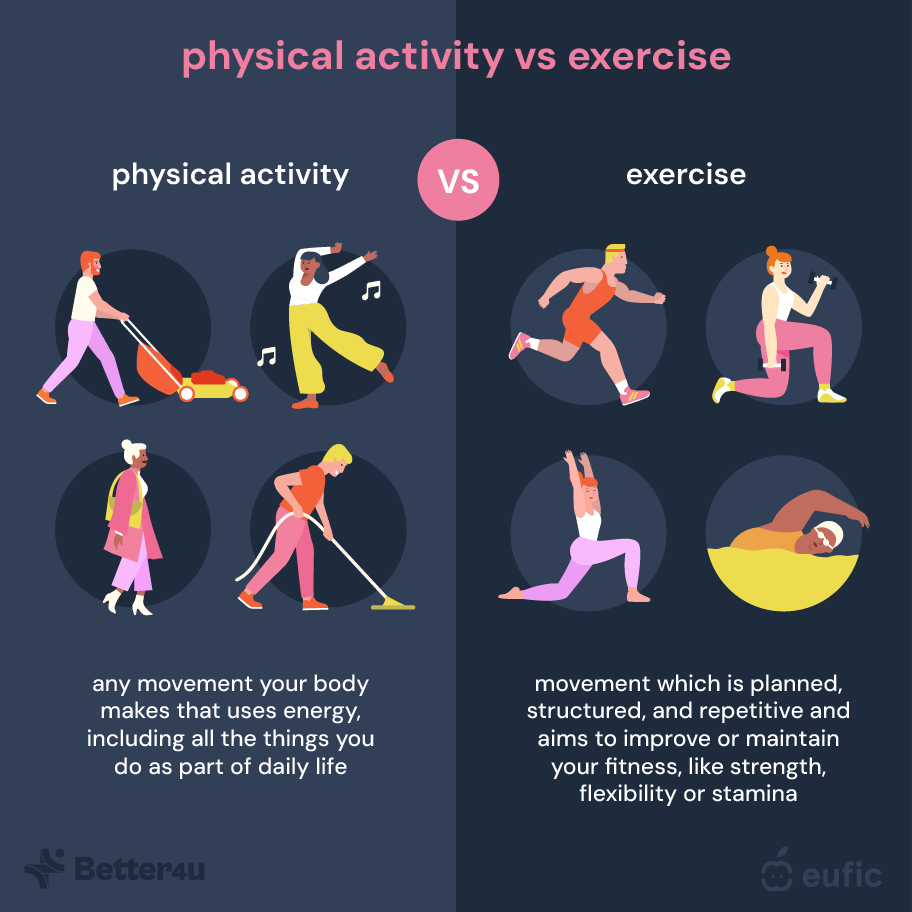
Figure 2. physical activity vs exercise
Diet and exercise also affect the body in different ways. Losing a lot of weight through dieting alone can lead to loss of muscle, which may slow your metabolism and make further weight loss harder. Exercise-driven fat loss, on the other hand, helps preserve muscle mass. This supports a healthier metabolism and makes it easier to maintain weight loss over time.18
The World Health Organization provides specific recommendations for different age groups on physical activity (Table 1). It is important to note that these guidelines are generalised and intended as a reference point; individual needs may vary, and personalisation and adaptation to each person are essential.
Table 1. Summary of WHO recommendation on minimum level of physical activity for health.18
| Age range | 5–17 years | 18–64 years | 65+ years |
|---|---|---|---|
| Recommendations | 60 minutes moderate-to-vigorous intensity activity per day | 150–300 minutes of moderate or 75–150 minutes of vigorous activity throughout the week | Same as adults 18–64, or as physically active as their abilities and conditions allow. |
| Vigorous intensity activity should be incorporated, including those that strengthen muscle and bone at least 3 times/week | Muscle-strengthening activities at moderate or greater intensity that involve all major muscle groups on 2 or more days a week | Also include activities which enhance balance and prevent falls 3 or more times/week | |
| Limit the amount of time spent being sedentary, particularly the amount of recreational screen time | Limit the amount of time being sedentary |
What is a healthy weight for your height and body type?
The Body Mass Index (BMI) is a widely used way to assess weight status in adults. It looks at the relationship between weight and height to classify individuals with underweight, healthy weight, overweight, or obesity. However, the BMI has important limitations: it doesn’t measure body fat directly, doesn’t show where fat is stored, and doesn’t account for differences in muscle mass, age, or ethnicity.19 All these factors can affect health risks.20 Another method that is gaining attention as a useful assessment is the waist-to-height ratio. This focuses on waist size compared to height, which can help better estimate how much fat is stored around the abdomen – an important indicator for health.21 Other measures to analyse body composition using advanced technologies can provide more detail, and although they are more accurate, they’re not always easy to access.18
Where do you lose weight first?
People lose weight differently, and this depends on many things, including genetics, hormones, age, sex, and body type. For example, women often store more fat around their hips and thighs because of the effect of oestrogen, a hormone that helps to regulate the reproductive system and impacts how fat is distributed in the body. This type of fat is called subcutaneous fat, which sits just under the skin. Subcutaneous fat is generally less harmful than visceral fat (the kind around organs), but it can be harder to lose.
You can’t choose where your body will lose fat first. Exercise can strengthen certain muscles, but it can’t reduce fat from a specific area. Rather, fat is lost gradually from all over the body. So, while you can’t control where you lose fat first, overall weight loss will eventually reduce both visceral and subcutaneous fat.22,2
How to prevent weight regain and maintain your results
Maintaining a healthier weight depends on many long-term factors, such as eating habits, physical activity and your surrounding envrionment, including factors you often cannot control like certain medications, stress, life events, your genes, and the body’s natural responses to trauma or illness. Because of this, preventing weight gain is usually easier than losing weight, and keeping it off. However, even for cases of people with increased genetic risk for high BMI, maintaining a balanced diet and healthy lifestyle can help reduce the impact of genetic predisposition.
Each unique biological condition and specific environmental pressures help explain why many people regain weight after dieting, regardless of effort.23 This happens because the body adapts to weight loss. As you lose weight, your metabolism slows down, meaning you burn fewer calories than before. At the same time, cutting calories triggers hormonal changes that increase hunger and make you want to eat more. These natural responses can make sticking to a low-calorie diet feel like a constant uphill battle.6
For this reason, very restrictive diets are often hard to maintain in the long run. A better approach is to focus on a balanced way of eating that is enjoyable, realistic, and fits into everyday life.
Obesity management
Obesity is a chronic disease involving excessive body fat that presents serious health risks. This is different from having excess weight, which can mean weighing more than what is considered ideal for your height. For people living with obesity, too much body fat affects physical and mental health and increases the risk of conditions like type 2 diabetes, heart disease, joint problems, and depression. Understanding this difference helps make sure people get the right kind of support, rather than a one-size-fits-all message about “losing weight”.
To diagnose obesity, the European Association for the Study of Obesity (EASO) recommends consulting with a healthcare professional, using BMI together with a waist-to-height ratio (with a threshold of 0.5 or higher) and considering any medical, functional, or psychological complications that extra body fat may be causing. In practice, this means that diagnosing obesity should involve not just physical measurements, but also an assessment of mental health (such as depression, anxiety, or eating disorders) and eating behaviours (like emotional or restrictive eating). This more holistic approach helps ensure that obesity management strategies, delivered by healthcare professionals, are tailored to the individual’s overall health and well-being.24
For some people, medical or clinical options, such as structured obesity management programmes, obesity management medications, or bariatric surgery, may be appropriate. These options are not for everyone and work best when discussed with a healthcare professional, who can explain the potential benefits and risks and help tailor treatment to your individual health needs.
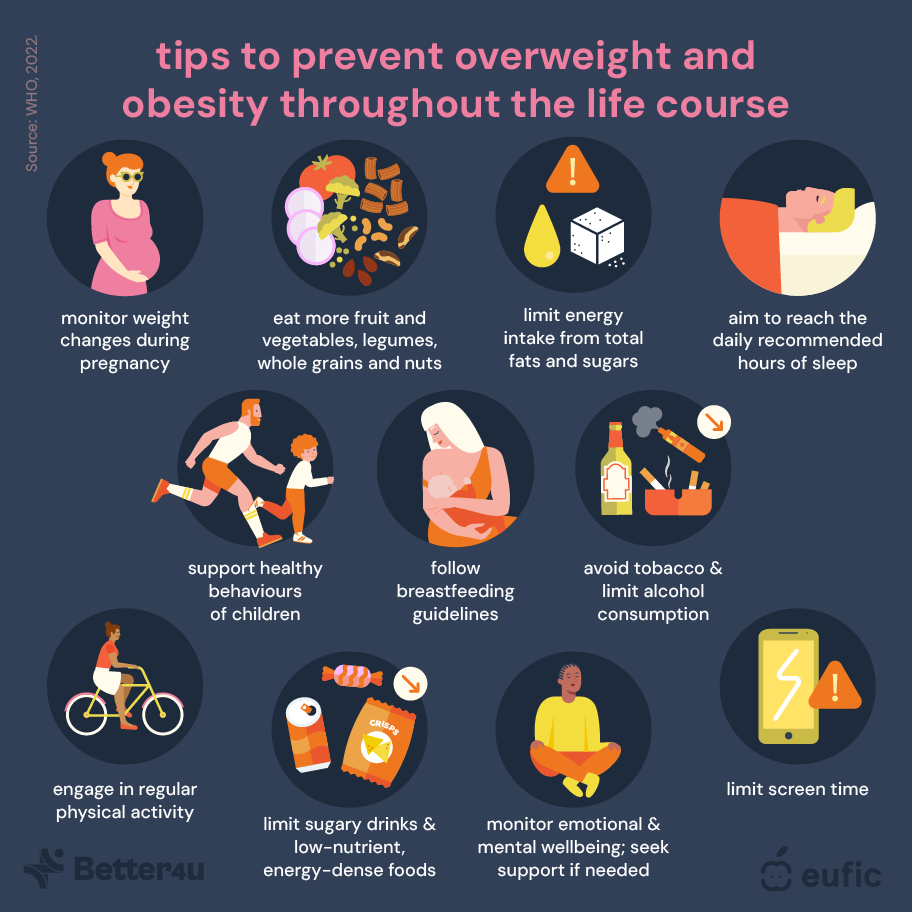
Figure 3. Tips to prevent overweight and obesity throughout the life course.25
Why “one-size-fits-all” diets don’t work - and what to do instead
People differ in their preferences, lifestyle, and metabolism, and these differences matter for weight management. That’s why personalised approaches, flexibility, and focusing on everyday habits, rather than strict rules, are key for long-term health.
Body weight is shaped by many factors, including metabolism, lifestyle, caloric intake and cultural traditions, genetics, and more. Many people, particularly in Western societies, live in what researchers call an “obesogenic environment”, which is used to describe an environment that makes weight gain more likely. Examples of structural factors that contribute to making environments more “obesogenic” include closer proximity to fast food outlets, targeted food marketing, financial barriers to healthy and affordable food, towns and cities that limit opportunities for physical activity, and weak policies or regulations that fail to support healthier choices. All of these wider influences play a role in weight gain, often beyond individual control.26
Check out the BETTER4U infographic to learn more about why it’s not only your actions that can lead to obesity, but also ‘obesogenic environments.’
Conclusion
Health is more than just weight, and healthy weight management is more complex than measuring calories and steps. There is no single diet or strategy that fits everyone, and what matters most is finding an approach that works for you and fits your lifestyle. The best diet for weight management is one that can be maintained in the long term. Sustainable changes in diet, activity, and sleep are more effective than short-term fixes.
If you’re looking for guidance, talk to a doctor or registered dietitian or nutritionist who can help you create a plan that matches your goals and health status. The key is to focus on your overall well-being, not just the number on the scale.
The BETTER4U project has received funding from the European Union’s Horizon Europe research and innovation programme under grant agreement No 101080117.



References
- Hall KD, et al. (2022). The energy balance model of obesity: beyond calories in, calories out. The American journal of clinical nutrition, 115(5), 1243-1254.
- Steiner BM & Berry DC (2022). The regulation of adipose tissue health by estrogens. Frontiers in Endocrinology 13:889923.
- Fonseca DC, et al. (2018). Body weight control and energy expenditure. Clinical Nutrition Experimental 20:55–59.
- Sagayama H, et al. (2014). Measurement of body composition in response to a short period of overfeeding. Journal of Physiological Anthropology 33(1):29.
- The Conversation (2025). Obesity care: Why “eat less, move more” advice is failing. Accessed 4 February 2026.
- Kim JY (2021). Optimal diet strategies for weight loss and weight loss maintenance. Journal of Obesity & Metabolic Syndrome 30(1):20–31.
- Schulze MB, et al. (2018). Food based dietary patterns and chronic disease prevention. BMJ 361:k2396.
- World Health Organization (WHO). (2026). Healthy diet. Accessed 4 February 2026.
- Nevin SM & Vartanian LR (2017). The stigma of clean dieting and orthorexia nervosa. Journal of Eating Disorders 5:37.
- Boeing H, et al. (2012). Vegetables and fruit in the prevention of chronic diseases: A critical review. European Journal of Nutrition 51(6):637–663.
- Balakrishna R, et al. (2022). Consumption of nuts and seeds and health outcomes including cardiovascular disease, diabetes and metabolic disease, cancer, and mortality: An umbrella review. Advances in Nutrition 13(6):2136–2148.
- Flores-Mateo G, et al. (2013). Nut intake and adiposity: Meta-analysis of clinical trials. American Journal of Clinical Nutrition 97(6):1346–1355.
- Nguyen M, et al. (2023). Sugar-sweetened beverage consumption and weight gain in children & adults: A systematic review and meta-analysis of prospective cohort studies and randomized controlled trials. American Journal of Clinical Nutrition 117(1):160-174.
- Flanagan A (2025). Is the timing of eating relevant for weight loss? Proceedings of the Nutrition Society 84:1–9.
- Liu HY, et al. (2024). Meal timing and anthropometric and metabolic outcomes: A systematic review and meta-analysis. JAMA Network Open 7(11):e2442163.
- Niezgoda N, et al. (2025). The impact of physical activity on weight loss in relation to the pillars of lifestyle medicine—A narrative review. Nutrients 17(6):1095.
- Recchia F, et al. (2023). Dose-response effects of exercise and caloric restriction on visceral adiposity in overweight and obese adults: A systematic review and meta-analysis of randomised controlled trials. British Journal of Sports Medicine 57(16):1
- World Health Organization, T. (2010). Global recommendations on physical activity for health. World Health Organization.
- Wu Y, Li D & Vermund SH (2024). Advantages and limitations of the body mass index (BMI) to assess adult obesity. International Journal of Environmental Research and Public Health 21(6):757.
- Muscogiuri G, Verde L & Colao A (2023). Body mass index (BMI): Still be used? European Journal of Internal Medicine 117:50–51.
- Pineda JC, Montano DM & Urbano LN (2026). Waist‑to‑height ratio and cardiovascular risk: moving beyond BMI in aging populations. The Lancet Regional Health – Americas 54:101349.
- Abraham TM, et al. (2015). Association between visceral and subcutaneous adipose depots and incident cardiovascular disease risk factors. Circulation 132(17):1639–1647.
- Greenway FL (2015). Physiological adaptations to weight loss and factors favouring weight regain. International Journal of Obesity 39(8):1188–1196.
- Busetto L, et al. (2024). A new framework for the diagnosis, staging and management of obesity in adults. Nature Medicine 30(9):2395–2399.
- World Health Organization (WHO). (2025). Obesity and overweight. Accessed 4 February 2026.
- Verde L, et al. (2024). Obesogenic environments as major determinants of a disease: It is time to re-shape our cities. Diabetes, Metabolic Research and Reviews:e3748.